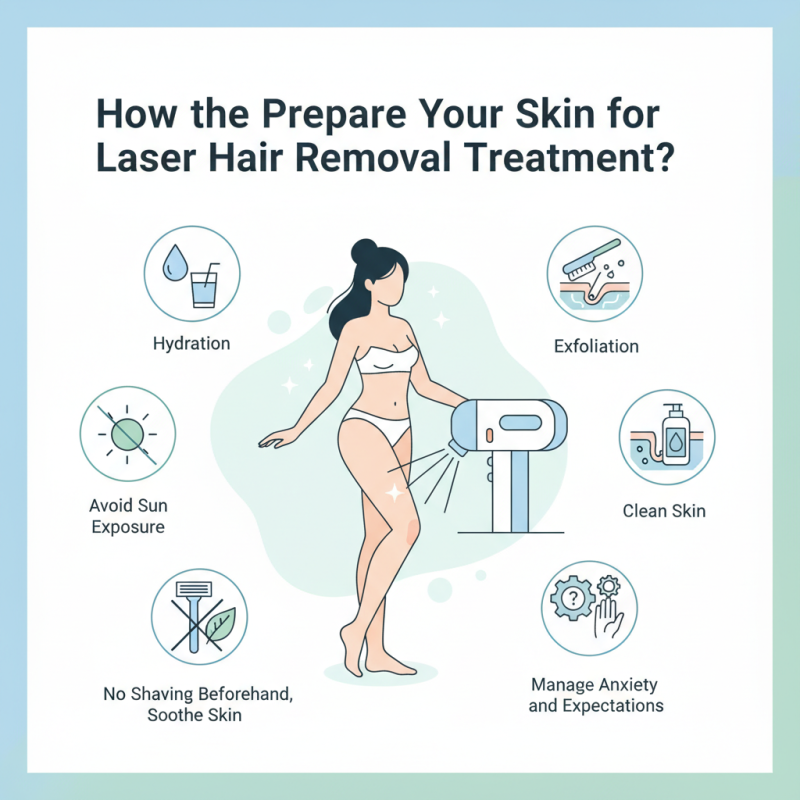
Preparing your skin for laser hair removal is crucial for achieving the best results. Dr. Samantha Lee, a leading dermatologist, emphasizes, “Healthy skin promotes effective laser treatment.” Proper preparation enhances the interaction between the laser and your hair follicles.
Before your session, ensure your skin is clean and free of lotions or oils. Exfoliating a few days prior can help remove dead skin cells and improve treatment efficacy. Be mindful of sun exposure, as tan skin can cause complications. Avoid sunbathing for at least two weeks ahead of your procedure.
Hydration is key too. Drinking plenty of water helps keep your skin supple. However, you may find your skin feels sensitive after shaving. Remember, it’s normal to feel anxious about the process. Addressing these concerns helps manage expectations and improves your experience during laser treatments. How to prepare skin for laser hair removal is essential for both safety and success.
Laser hair removal technology has become increasingly popular due to its effectiveness. It uses concentrated beams of light to target hair follicles. The heat from the laser destroys the hair at its root. This results in a significant reduction in hair growth over time.
Understanding the various types of lasers is crucial. Different skin tones and hair types respond differently to specific lasers. For instance, some lasers work better on darker hair. Others are designed for lighter skin tones. Knowing your skin type can help you choose the right treatment. However, some users may experience side effects, like redness or swelling. This is normal but can be distressing.
Preparing your skin is essential before the treatment. Exfoliating can help remove dead skin cells, making the process smoother. Avoiding sun exposure is equally important. Tanned skin can lead to complications during the procedure. Maintaining a consistent skincare routine in the weeks leading up to your appointment is beneficial. Ultimately, each person’s experience is unique, and being informed can help you feel more at ease.
When preparing your skin for laser hair removal, consulting with a qualified practitioner is crucial. A professional will assess your skin type and hair color to ensure optimal treatment results. They have the experience needed to identify any potential issues, such as skin sensitivities or underlying conditions. This personalized approach helps to reduce complications.
During the consultation, you will discuss your skin history. It's important to share any allergies or medications you are taking. Miscommunication can lead to dissatisfaction with results. The practitioner may also explain the procedure in detail. You might feel apprehensive about pain or aftercare, so asking questions is beneficial.
After the initial meeting, reflect on your concerns and desires. If the practitioner seems rushed or unclear, it’s okay to seek another opinion. Your comfort and trust in their expertise matter. This step can enhance your confidence and set realistic expectations for your laser hair removal journey.
Preparing your skin before laser hair removal is essential for the best outcomes. Start by exfoliating the area one week before your treatment. Use a gentle scrub or a loofah. This helps remove dead skin cells, making the laser more effective. Hydrated skin responds better to the procedure. Drink plenty of water in the days leading up to your appointment.
Avoid sun exposure. Tanned skin may complicate the laser process. If you’ve been outdoors, consider postponing your treatment. It's also wise to refrain from harsh products a few days prior. This includes retinoids and acids. They can irritate the skin and may lead to complications during treatment.
Tips: Always do a patch test 48 hours before treatment. This helps gauge how your skin reacts to the procedure. With all preparations, notice if any area feels sensitive or discomforting. Healing and skin sensitivity vary among individuals. Reflect on your skin’s unique needs for the best results.
| Preparation Step | Description | Recommended Duration Before Treatment |
|---|---|---|
| Avoid Sun Exposure | Minimize sun exposure to reduce the risk of side effects. | 4-6 weeks |
| Shave Treatment Area | Shave the area to be treated to avoid surface hair interfering with the laser. | 1 day before |
| Avoid Blood Thinners | Stay away from medications or supplements that could thin your blood. | 1 week prior |
| Moisturize Your Skin | Keep the skin hydrated to enhance laser effectiveness and reduce sensitivity. | 1 week prior |
| Consult a Professional | Discuss your medical history and skin type with a qualified practitioner. | As early as possible |
After undergoing laser hair removal, it is vital to prioritize your skin care. The skin may feel sensitive and tinged with redness due to the procedure. This is where proper aftercare plays a significant role in achieving optimal results. During the first 24-48 hours, avoid sun exposure. The skin is particularly vulnerable, increasing the risk of hyperpigmentation.
Hydration is key. Drink plenty of water and apply soothing aloe vera gel or a fragrance-free moisturizer regularly. Studies suggest that hydrating the skin can enhance healing by up to 30%. Avoid any harsh products such as acids or exfoliants for at least a week. These can further irritate the treated area. If you notice persistent redness or discomfort, it could indicate a reaction that needs reflection and possibly professional advice.
As your skin heals, observe any unusual changes. Dryness or peeling skin may occur but should improve over time. Always wear sunscreen with at least SPF 30 on treated areas, as laser-treated skin is more sensitive to UV rays. A 2022 survey indicated that 45% of individuals did not follow up with post-care routines properly, leading to undesirable results. By committing to a thoughtful post-treatment regimen, you’re ensuring the best possible outcome from your laser hair removal sessions.
Preparing for laser hair removal goes beyond just the treatment session. Proper follow-up care is crucial for achieving the best results. After your session, your skin may feel sensitive or slightly irritated. It’s normal to notice some redness. Applying a cold compress can help soothe the skin.
Moisturizing after treatment is important. It prevents dryness and promotes healing. Look for gentle, hydrating lotions. Avoid products with strong fragrances or active ingredients for a few days. This allows your skin to recover without irritation. Additionally, be mindful of sun exposure. Your skin will be more sensitive post-treatment.
Recognizing these points can lead to better results, but not every experience will be perfect. Some might find their skin reacting differently than expected, which could lead to frustration. It's essential to listen to your body and adjust your care routine as needed. Reflecting on your experience will help in managing expectations for future sessions.
: Laser hair removal uses concentrated beams of light to target hair follicles. This destroys hair at the root.
Different lasers respond uniquely to skin tones and hair types. Some work better on darker hair, others on lighter skin.
Prepare your skin by exfoliating and avoiding sun exposure. Tanned skin can complicate the procedure.
Normal side effects include redness and swelling. These can be distressing but usually fade quickly.
A qualified practitioner assesses your skin type to ensure optimal results. They identify potential issues before treatment.
Share your skin history, allergies, and medications. Clear communication helps avoid dissatisfaction with results.
Reflect on your concerns after the consultation. Trust your instinct if the practitioner seems rushed or unclear.
Don’t hesitate to ask questions. It’s important to feel comfortable and informed about the process.
Preparing for laser hair removal involves several key steps to ensure optimal results. First, it is essential to understand the technology behind laser hair removal, which targets hair follicles using concentrated light. Consultation with a qualified practitioner will help evaluate individual skin types and hair conditions, providing personalized recommendations.
When learning how to prepare skin for laser hair removal, focus on exfoliating the treatment area a few days prior to your appointment to remove dead skin cells, and avoid sun exposure to minimize sensitivity. Post-treatment care is equally important, including keeping the skin moisturized and protected from the sun. Expected results typically include permanent hair reduction, with follow-up sessions adjustable based on individual progress and hair regrowth. By following these guidelines, you can enhance the efficacy of your treatment and maintain skin health.
