Melasma can look like soft brown clouds across the cheeks, forehead, nose, or upper lip. Yet its treatment is rarely simple. Sun exposure, hormones, heat, skin irritation, and genetics may all influence its behavior. Even a carefully treated patch can return.
So, which laser is best for melasma treatment? The honest answer depends on your skin type, pigment depth, medical history, and previous reactions. Dermatologists may consider low-fluence Q-switched Nd:YAG, fractional non-ablative lasers, or picosecond devices. However, no laser works safely for everyone. Darker skin tones may face a higher risk of post-inflammatory hyperpigmentation after aggressive treatment.
Dr. Pearl E. Grimes, a respected pigmentation specialist, describes melasma as a “chronic and relapsing disorder of hyperpigmentation.” That description matters. Laser treatment should support a long-term plan, not replace daily broad-spectrum sunscreen, gentle skincare, and appropriate medical therapy. A board-certified dermatologist should examine the pigment before selecting settings.
Small details can change the outcome. Heat from a treatment room may worsen redness. Skipping sunscreen can erase weeks of progress. A powerful setting is not automatically a better setting.
There is room for doubt. Some patients improve quickly, while others need several sessions or stop because irritation develops. Before treatment, ask about test spots, maintenance care, downtime, and realistic results. The best decision is usually the safest one, measured over time.
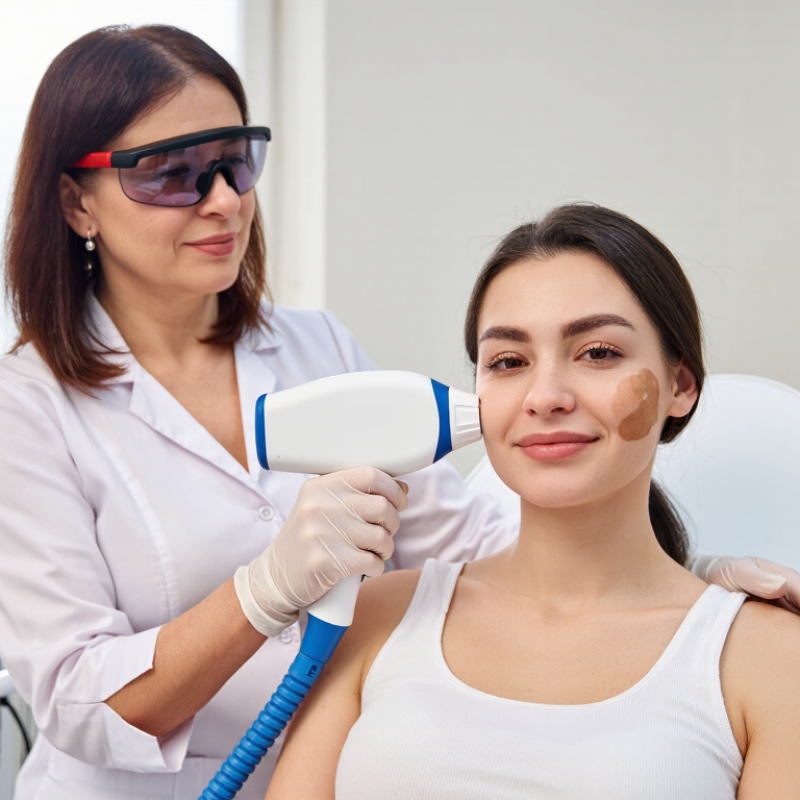
Melasma appears as uneven brown patches, often on the cheeks, forehead, and upper lip. Laser treatment targets melanin, the pigment creating this discoloration. Short pulses convert light into heat, breaking pigment into smaller particles that the body gradually clears. However, melasma is not only a pigment problem. Hormones, ultraviolet radiation, and visible light can keep activating melanocytes. The American Academy of Dermatology recommends broad-spectrum SPF 30 or higher, with visible-light protection when appropriate. Sunscreen is not optional.
Tip: Confirm the diagnosis before choosing a device. Post-inflammatory hyperpigmentation and lentigines may look similar, but they require different settings. A dermatologist should review medical history, pregnancy plans, medications, and recent tanning. A 2022 international consensus report describes melasma as chronic and frequently recurrent, so treatment goals should remain realistic.
Tip: Ask how the laser controls heat. Low-fluence approaches may reduce excess pigment while limiting inflammation, but aggressive energy can worsen melasma, especially in darker skin tones. A 2023 systematic review in the Journal of Cosmetic Dermatology reported improvement with several laser methods, yet results varied and recurrence remained common. That inconsistency matters. The best laser is not always the strongest one.
Tip: Request a test spot and a written aftercare plan. Watch for prolonged redness, darkening, or patchy lightening. Clinical experience matters more than impressive equipment claims. Even careful treatment can fail without daily light protection, and some patients need topical therapy before or after laser sessions.
Melasma is not one uniform condition. It may appear mainly in the epidermis, deeper dermis, or both layers. The color can look light brown, gray-brown, or uneven across the cheeks, forehead, and upper lip. A dermatologist should examine the pattern, depth, skin tone, and history before suggesting a laser. A Wood’s lamp may help, but it is not always decisive. Real skin can be complicated.
Tip 1: Identify your melasma pattern. Superficial pigment may respond differently from deeper pigment. Mixed melasma often needs cautious planning.
Tip 2: Consider your skin characteristics. Darker or easily tanning skin may have a higher risk of post-inflammatory hyperpigmentation. Sensitive skin, eczema, acne, and recent sun exposure also matter. Tell your clinician about hormonal changes and every product you use.
Tip 3: Ask about a test spot. A small treated area can reveal how your skin reacts before a larger session. It is not a perfect guarantee.
Tip 4: Choose settings, not promises. The safest option depends on energy, pulse duration, treatment spacing, and cooling. Stronger treatment is not automatically better. Sometimes, it worsens the contrast.
Tip 5: Discuss maintenance. Melasma can return after heat, sunlight, or hormonal shifts. Daily broad-spectrum sunscreen and gentle skincare remain important, even after laser treatment. Expectation management matters. It is easy to underestimate recurrence.
A qualified dermatologist should explain benefits, risks, alternatives, and signs of irritation. Be cautious when anyone guarantees permanent clearance or recommends treatment without assessing your melasma type.
7 Tips to Find the Best Laser for Melasma Treatment?
Comparing Laser Technologies for Pigment Reduction
Choosing a laser starts with diagnosis, not advertisements. Melasma may look like sun spots, but its depth and triggers differ. A 2023 systematic review in the Journal of Cosmetic Dermatology found that laser outcomes varied widely across treatment studies. Ask about skin type, pregnancy plans, hormones, medication, and previous reactions. The wrong wavelength can worsen pigmentation. It happens.
Compare technologies carefully. Low-fluence Q-switched lasers may target superficial pigment with limited downtime, but repeated sessions can increase rebound pigmentation. Fractional non-ablative lasers create microscopic treatment zones and may improve uneven tone and texture. However, heat can aggravate melasma in darker skin. Picosecond systems use shorter pulses, yet evidence remains less consistent than marketing suggests. Vascular-focused lasers may help when redness is prominent, but they are not universal pigment solutions.
Look for a clinician experienced with melasma, not only laser procedures. Request standardized photographs and a written plan for eye protection, cooling, settings, and aftercare. A 2022 international consensus report emphasizes daily broad-spectrum sunscreen and trigger control alongside procedures. Clinical reviews also report frequent recurrence, especially after ultraviolet exposure. Start conservatively. Patch testing may reveal a safer approach, although it cannot predict every reaction. Discuss topical therapy before and after treatment, because pigment control usually requires combination care. Judge progress after several weeks, not one dramatic session. Photos can mislead under different lighting.
Comparing Laser Technologies for Pigment Reduction
Choosing the best laser for melasma starts with a correct diagnosis. Melasma can resemble post-inflammatory pigmentation or other skin conditions. A licensed dermatologist should examine your skin type, medical history, hormones, and current skincare routine. Experience matters here. A laser suitable for one person may trigger darker patches in another.
Ask how the clinic controls safety and settings. Important details include wavelength, energy level, pulse duration, spot size, cooling, and treatment intervals. Conservative settings are often safer for deeper or darker skin tones. Request a small test area before treating the full face. Protect your eyes properly. Watch for redness, swelling, blistering, prolonged sensitivity, or rebound hyperpigmentation. Some side effects appear later, not immediately.
A reliable provider should explain realistic results, maintenance needs, and alternatives such as topical therapy or strict sun protection. Daily broad-spectrum sunscreen is essential, even after treatment. Avoid procedures when your skin is irritated, recently tanned, or healing from another treatment. Follow-up appointments help assess color changes and adjust settings gradually.
No laser is risk-free. That deserves honest discussion.
Keep your expectations measured. Melasma often returns with heat, sunlight, or hormonal changes. My own preference would be a slower plan with clear records and photographs. Faster is not always better. Ask who will perform the procedure, what training they have, and how complications are managed. A rushed consultation is a warning sign.
Choosing the best laser for melasma starts with the provider, not the machine. Select a licensed dermatologist or qualified medical practitioner with experience treating pigmentation across different skin tones. Ask how often they manage melasma and request realistic examples of healed results. A careful consultation should review your skin type, previous treatments, medications, hormonal changes, and sun exposure. Melasma can worsen after irritation, heat, or excessive laser energy.
Tip: Ask for a conservative treatment plan. The provider should explain the laser’s purpose, possible side effects, and alternatives. They should also discuss patch testing when appropriate, especially if your skin reacts easily. Be cautious of guaranteed results. Melasma often returns, even after a well-managed procedure. That is an uncomfortable fact, but it matters.
Follow-up care deserves equal attention. Confirm when your provider will review your skin, how many sessions may be considered, and what happens if pigmentation darkens. You may need strict broad-spectrum sunscreen, a hat, and gentle skincare during recovery. Keep simple photos in the same lighting. They can reveal gradual changes better than memory. Contact the clinic about blistering, severe pain, unusual swelling, or rapidly worsening discoloration. No plan is perfect. A thoughtful provider should adjust treatment rather than repeat the same approach automatically.
Melasma causes uneven brown or gray-brown patches on the cheeks, forehead, and upper lip. Laser pulses target melanin and break pigment into smaller particles. The body gradually clears them. It does not remove the underlying triggers.
Post-inflammatory hyperpigmentation and lentigines can resemble melasma. They may require different settings and treatment plans. A dermatologist should review your pattern, medical history, medications, pregnancy plans, and recent tanning.
Superficial, deep, and mixed melasma may respond differently. A Wood’s lamp can provide clues, but it is not always decisive. Real skin is complicated. Mixed pigment usually needs cautious planning.
Darker or easily tanning skin has a higher risk of post-inflammatory hyperpigmentation. Sensitive skin, eczema, acne, and recent sun exposure also matter. Tell the clinician about hormonal changes and every product you use.
Not automatically. Higher energy can increase inflammation and worsen dark patches, especially in darker skin tones. Ask about wavelength, energy, pulse duration, cooling, and treatment spacing. Slower may be wiser.
A test spot treats a small area before the full face. It shows how your skin may react to the chosen settings. It is helpful, not foolproof. Watch for prolonged redness, darkening, or patchy lightening.
Use broad-spectrum sunscreen daily, with visible-light protection when appropriate. Avoid tanning, excessive heat, and irritating products during recovery. Gentle skincare matters. Melasma can return after sunlight, heat, or hormonal changes.
Improvement is possible, but recurrence remains common and results vary. Possible problems include redness, swelling, blistering, prolonged sensitivity, and rebound hyperpigmentation. Some effects appear later. No laser is risk-free.
Choose a licensed dermatologist who explains benefits, risks, alternatives, and maintenance. Ask who performs the procedure and how complications are managed. Request written aftercare and follow-up photographs. A rushed consultation worries me.
Finding the right laser for melasma treatment begins with understanding how laser energy targets excess pigment while minimizing irritation to the surrounding skin. Because melasma can vary in depth, pattern, and cause, the best approach depends on your skin tone, sensitivity, medical history, and whether the pigmentation is epidermal, dermal, or mixed. When asking, “Which laser is best for melasma treatment,” consider how each technology reduces pigment, its suitability for your melasma type, and the risk of triggering further darkening.
Safety should remain the priority. Discuss appropriate energy levels, treatment intervals, cooling methods, and realistic results with a qualified provider. Ask about possible side effects, including redness, temporary darkening, or recurrence, and confirm that the treatment plan includes sun protection and follow-up care. A careful consultation, personalized settings, and ongoing monitoring can help improve results while reducing unnecessary risks.
